

Guides
The short answer
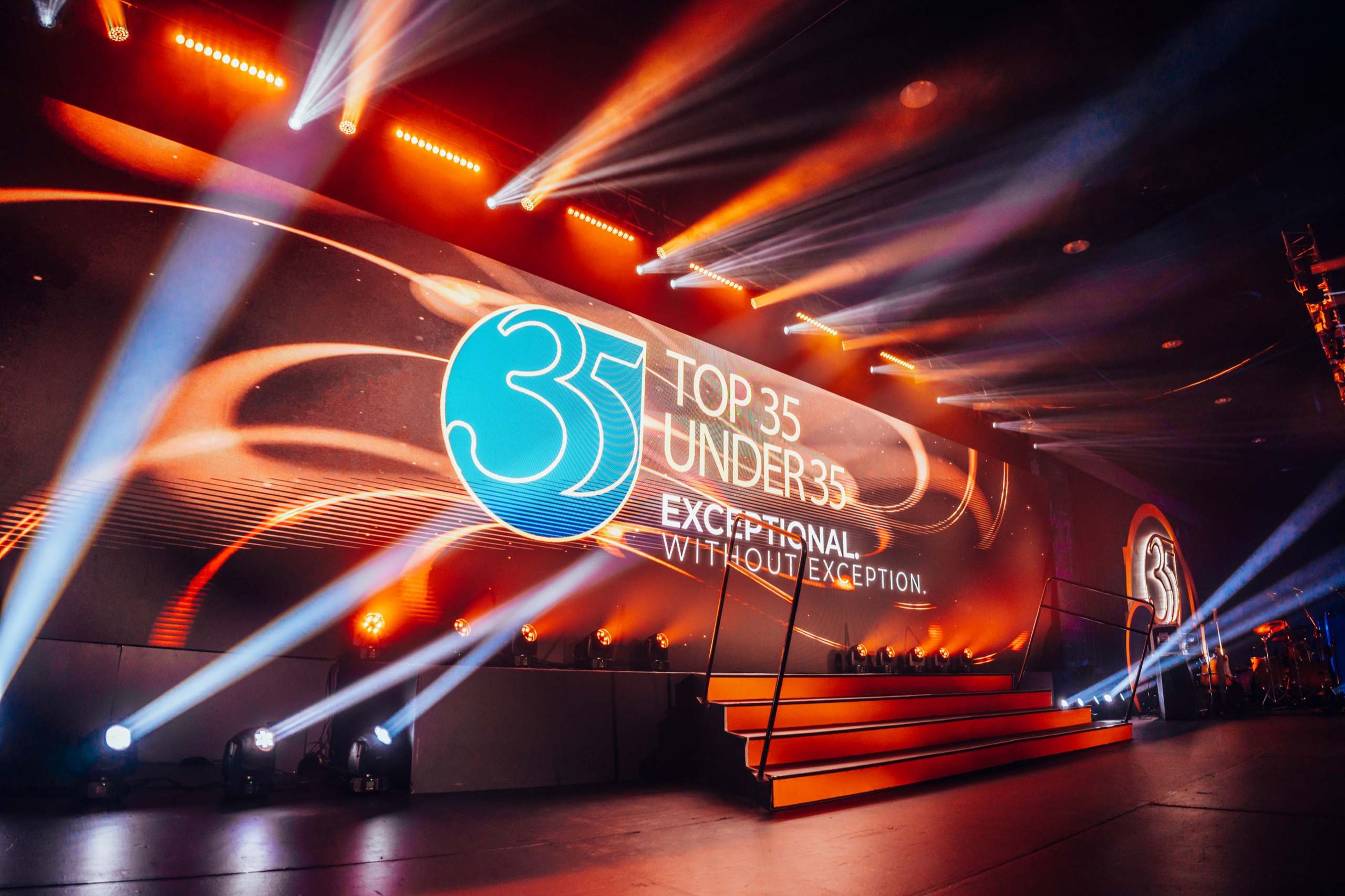
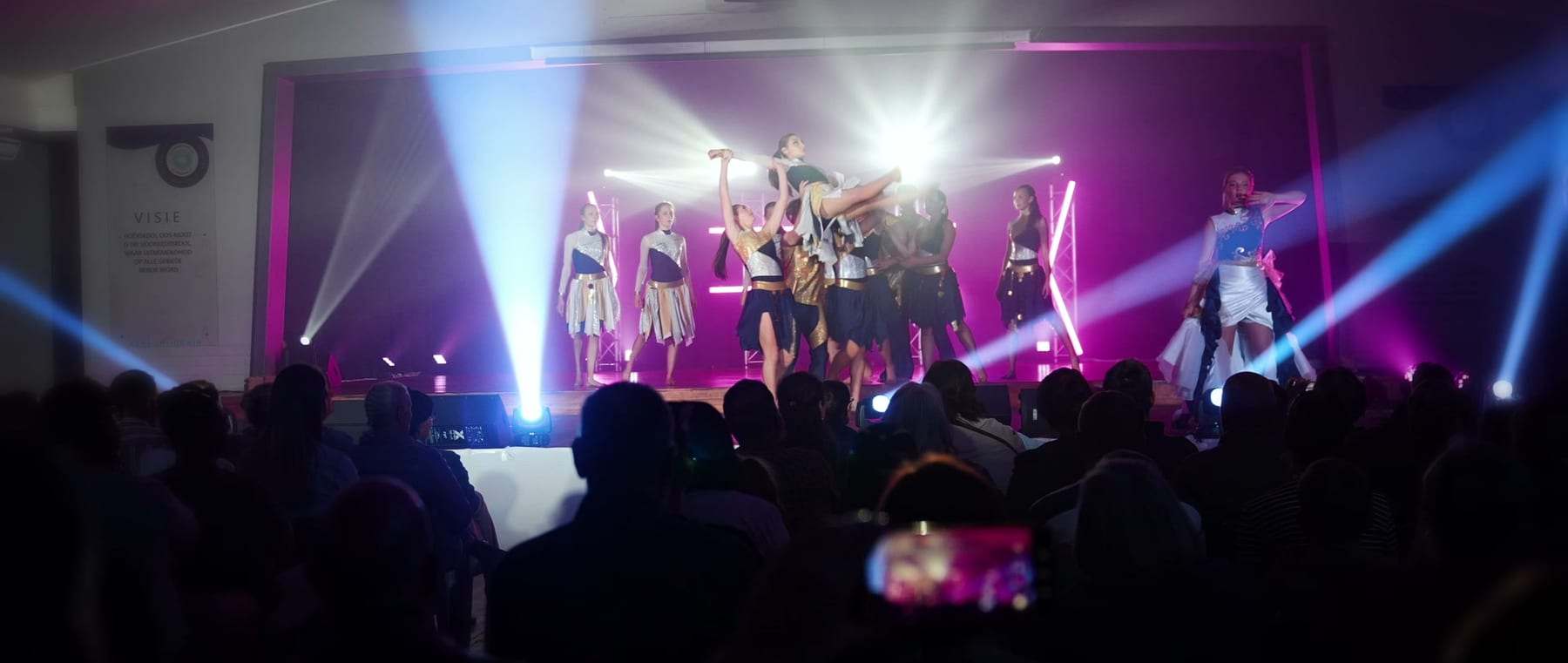
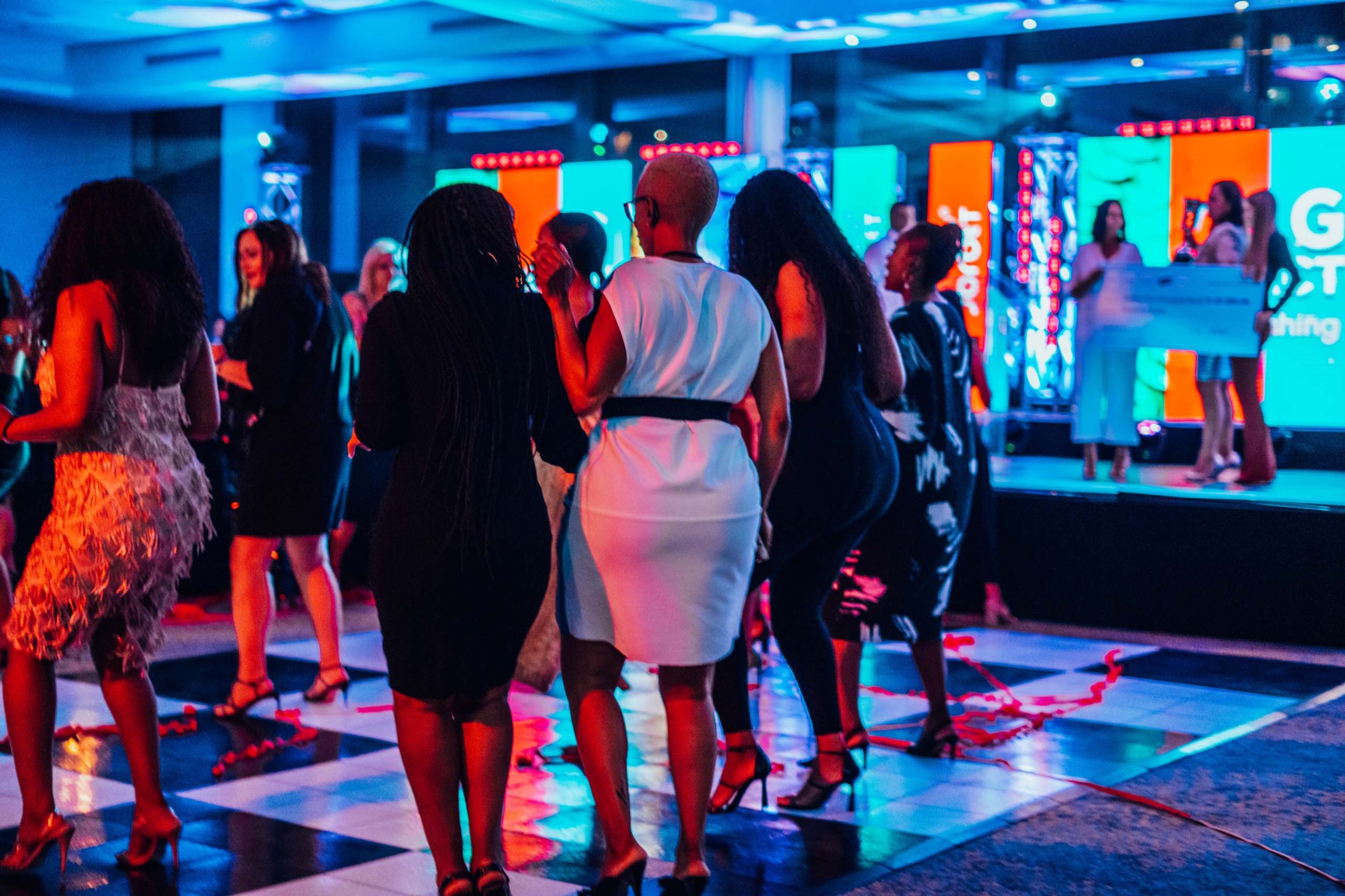
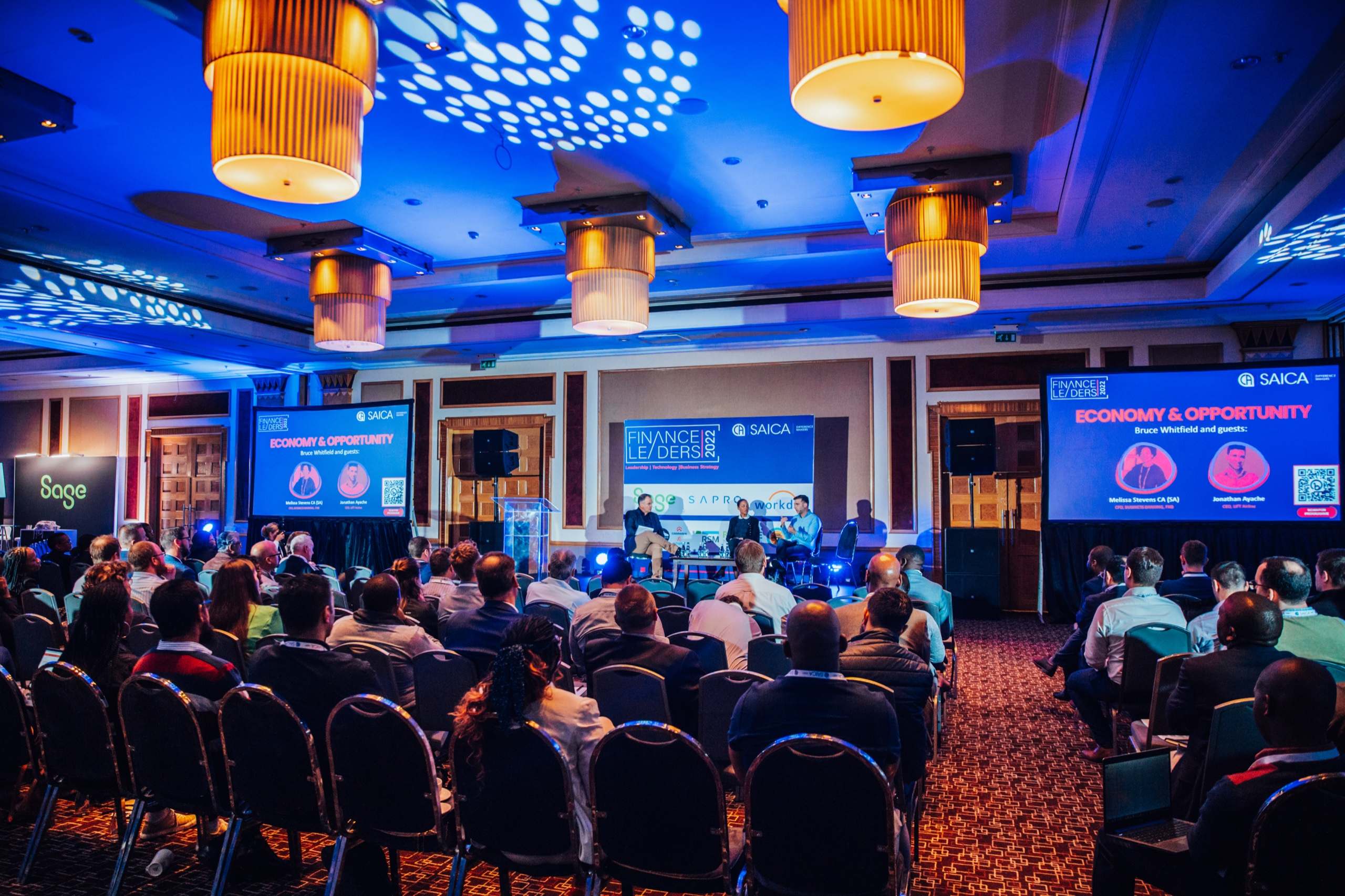
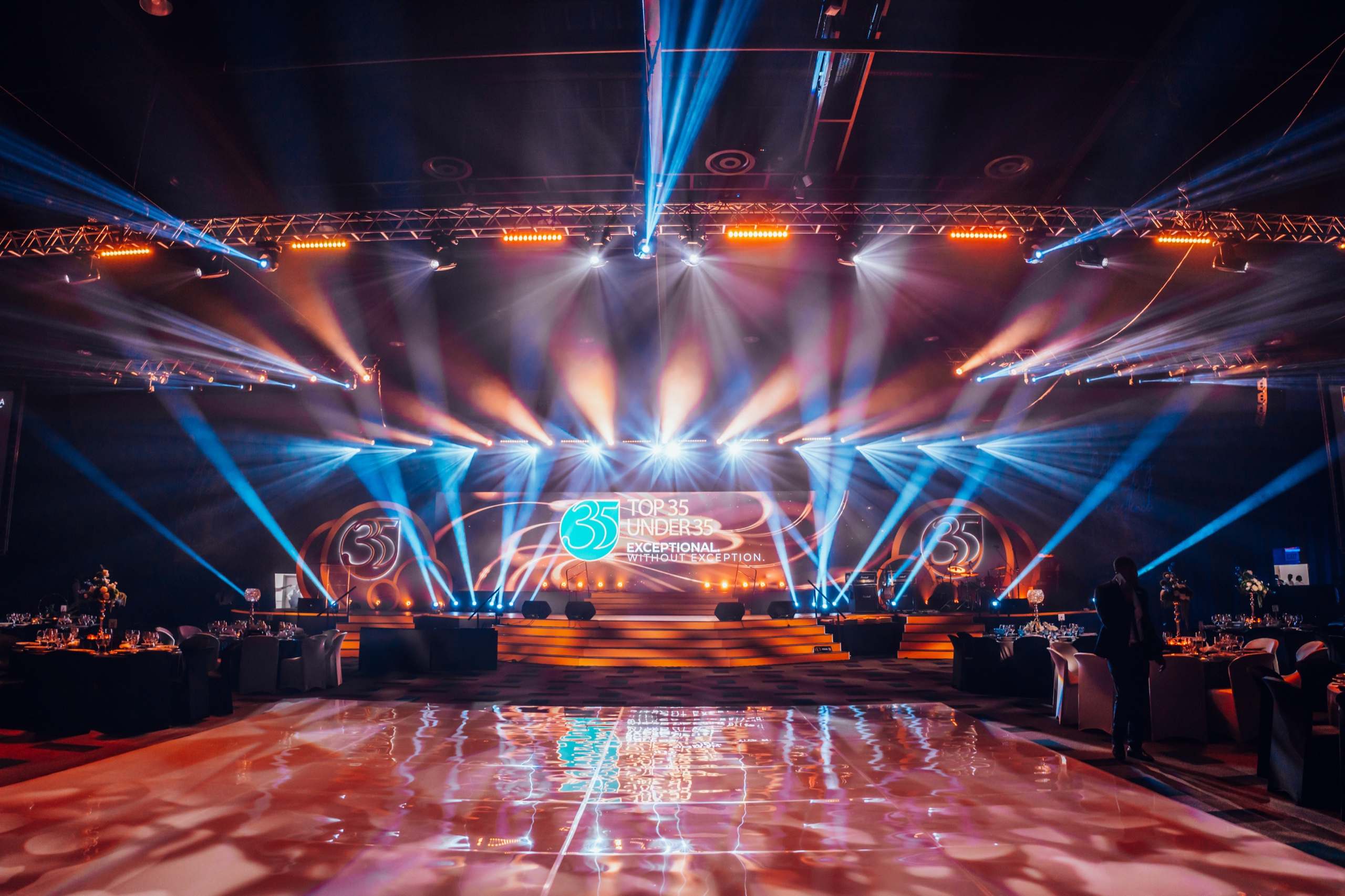
Event lighting does three jobs: it lets people see the stage, it sets the mood of the room, and it makes the big moments feel big. Washes colour the room, front light lights faces, moving heads and beams add movement, and haze makes the beams show in the air.
Washes: colour for the room
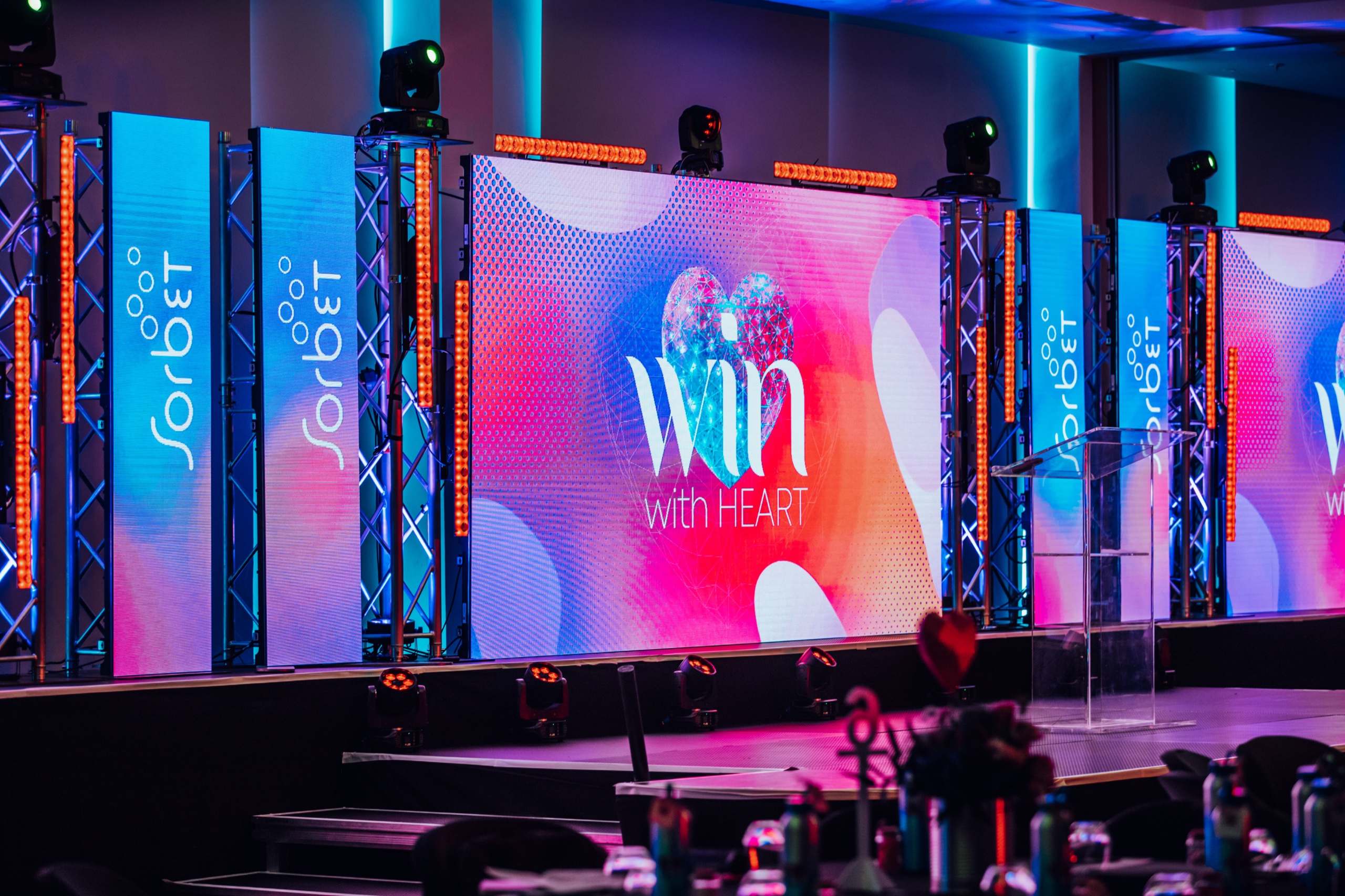
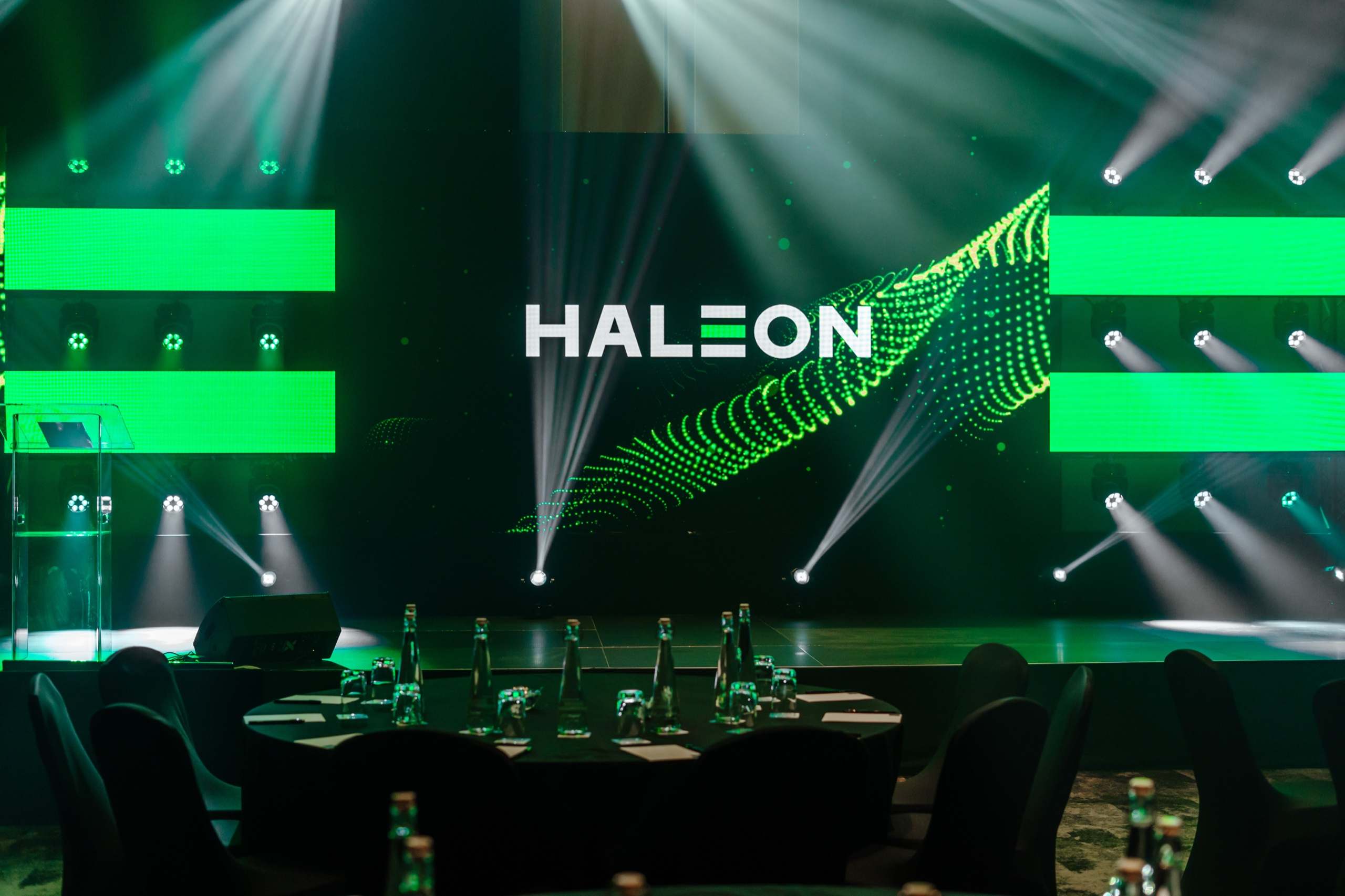
Wash lights flood the stage, the walls or the ceiling with even colour. Uplighters at the foot of the walls change the feel of a whole room. It's the quickest way to put a room in your brand colours, like Haleon green or Sorbet pink.
Front light: faces first
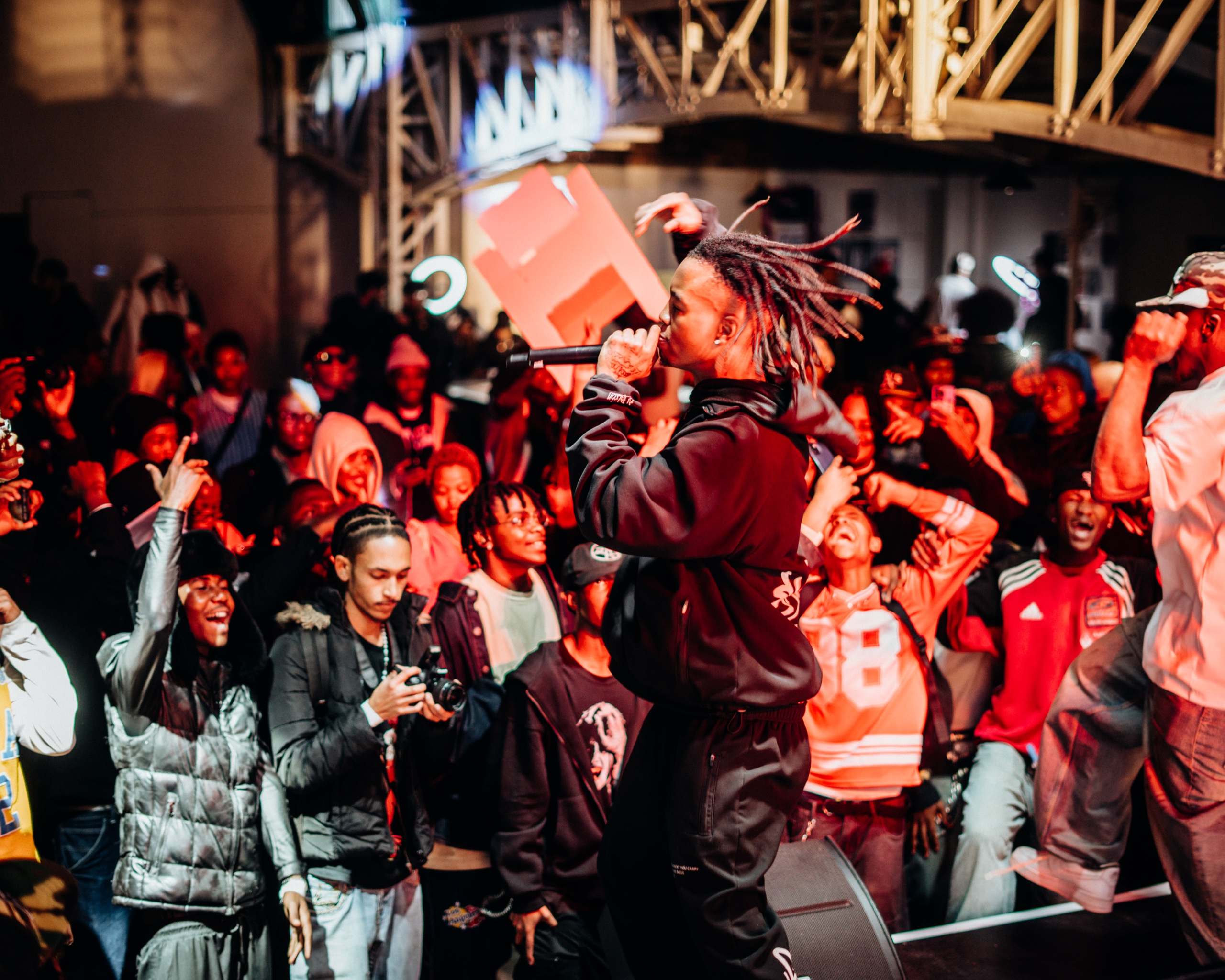
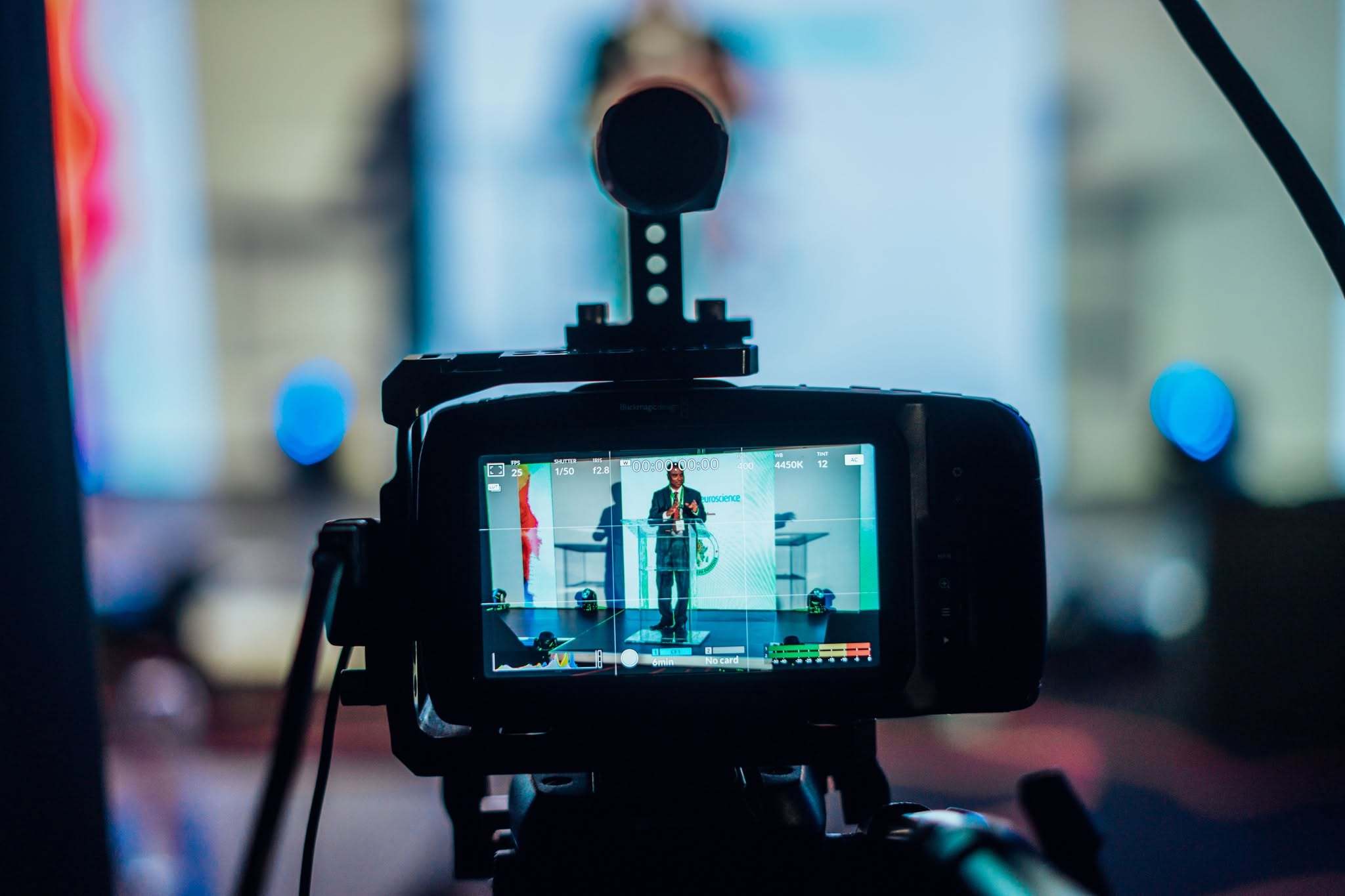
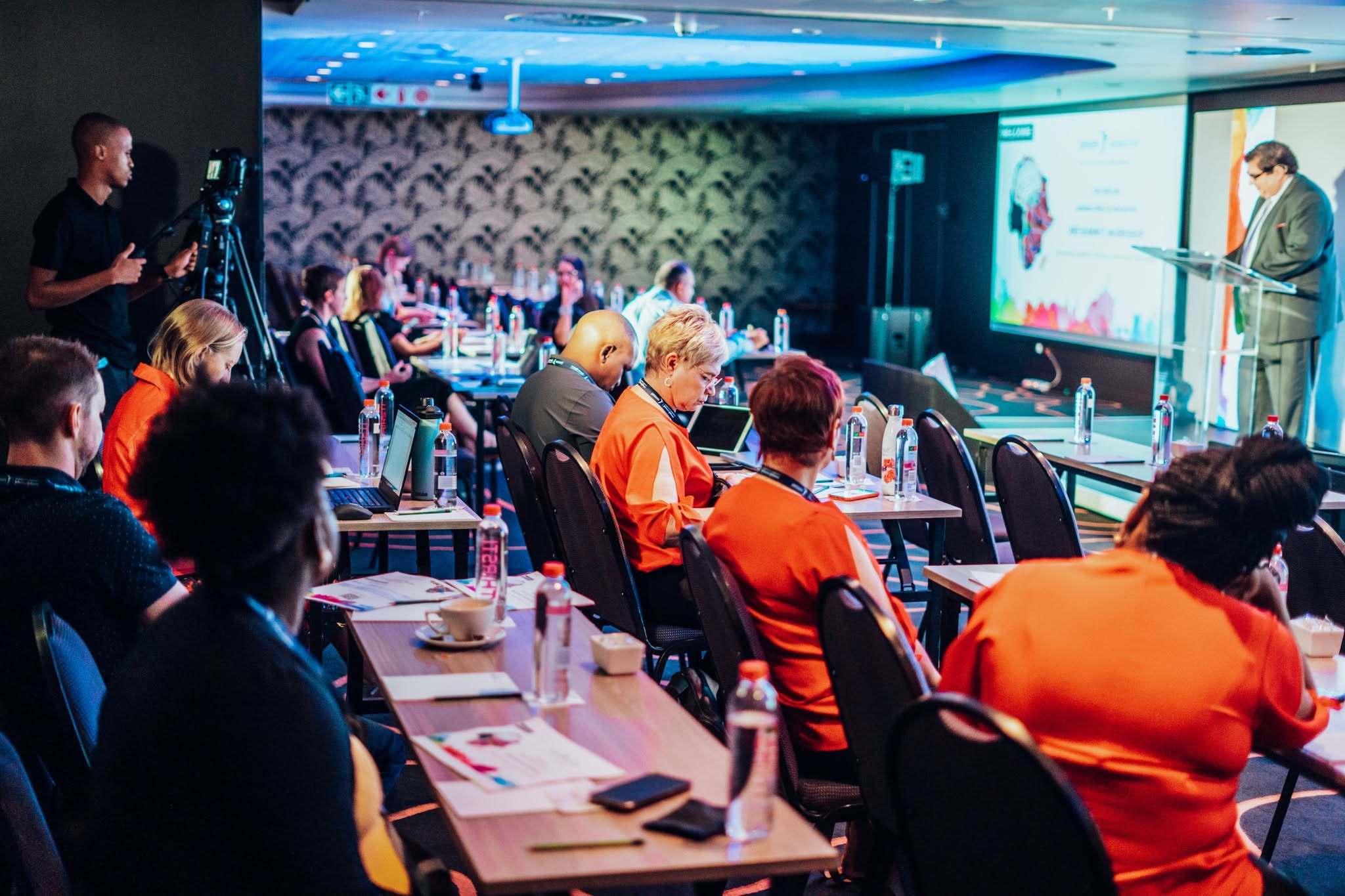
Speakers, MCs and award winners need light on their faces, from the front and a little above. Without it, a stage can look fine to the eye and dark on camera. If the event is filmed, streamed or photographed, front light matters most.
Moving heads and beams
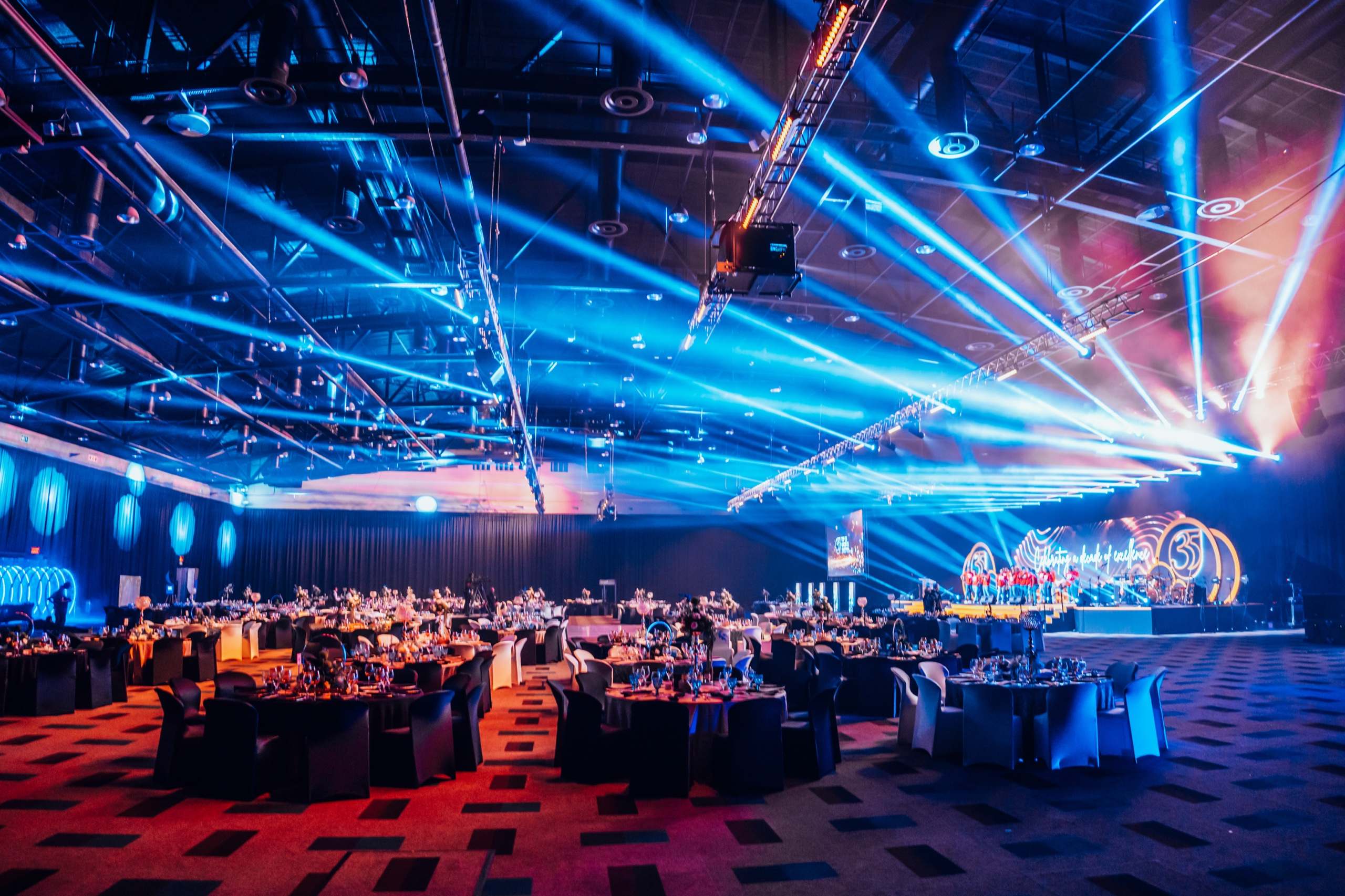
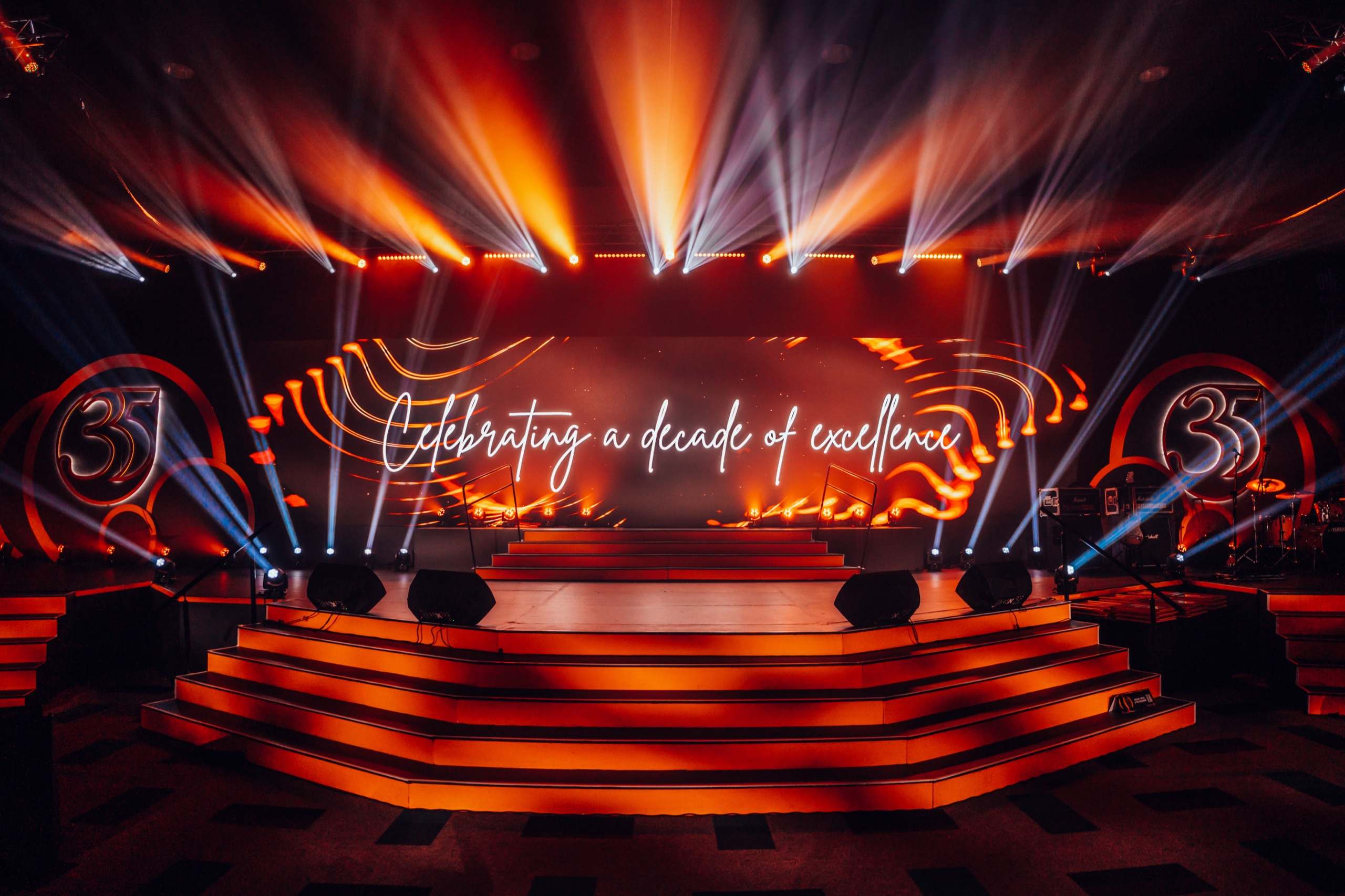
Moving heads are lights that pan, tilt and change colour on cue. Beam lights throw tight shafts of light that sweep across the room. Together they turn a ballroom into a show, programmed to the music and the cues.
Haze
Haze is a fine mist that makes beams visible in the air. Without it, you see spots of light but not the beams. Haze can set off some smoke detectors, so we check the venue's rules before the event.
Truss and pixel bars
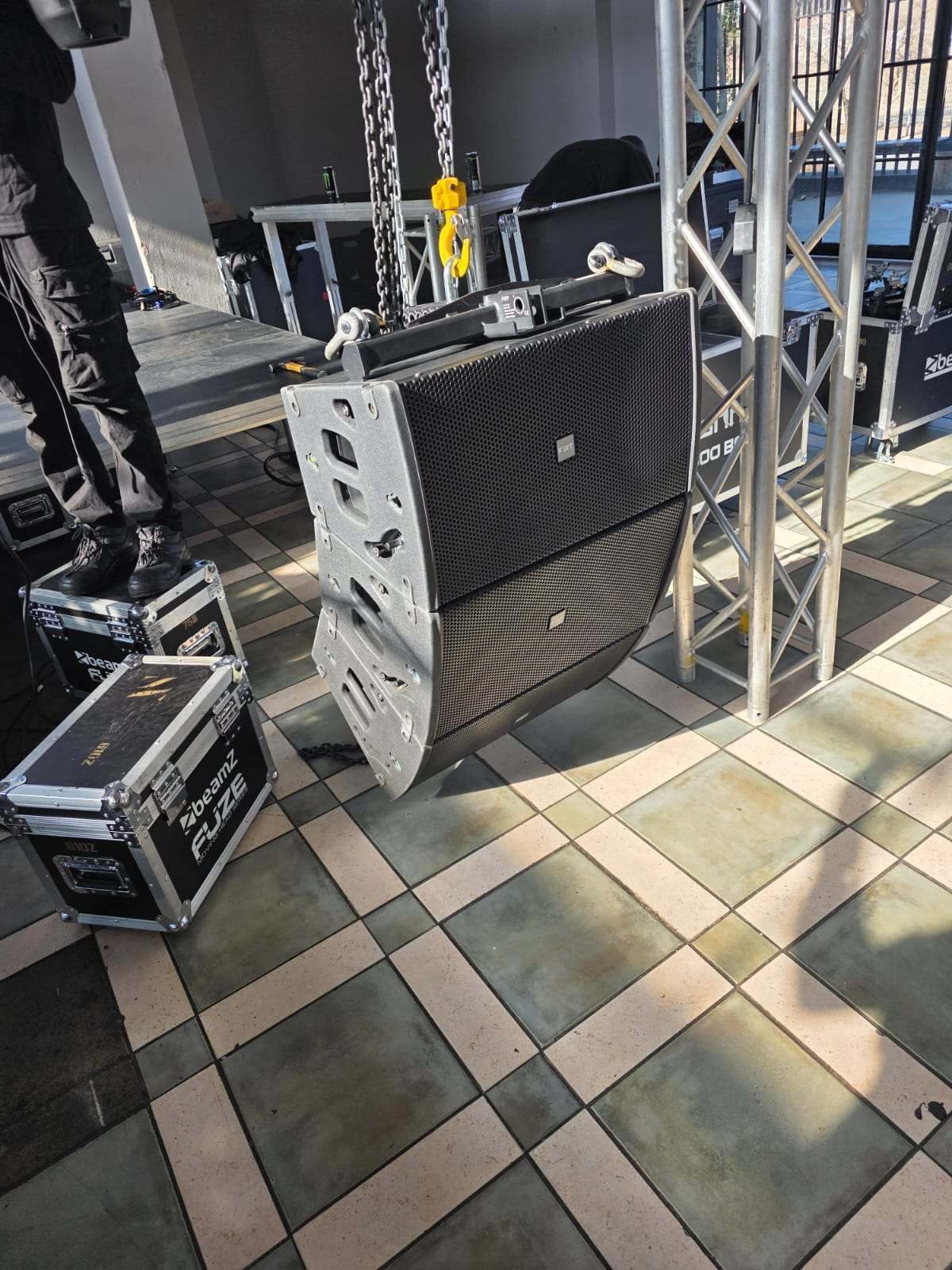
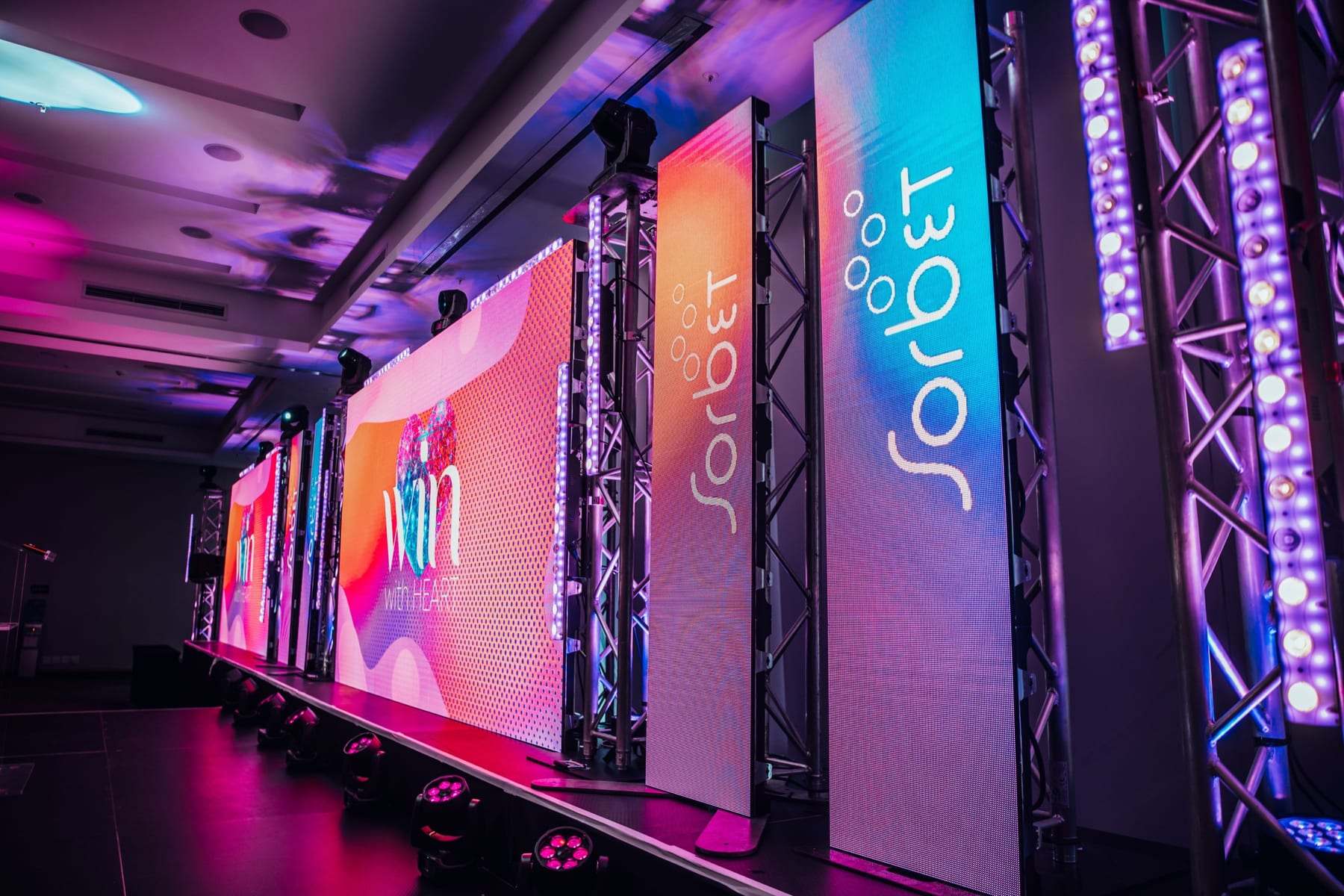
Truss is the aluminium frame that lights, screens and branding hang from, over the stage or as standing towers. Pixel bars are LED bars that run along the truss and add colour and movement, like the towers at Sorbet's conference.
Effects
Cold sparks and confetti make an opening, a reveal or a finale. Spark machines made for indoor events throw sparks up from the stage floor. Like haze, they depend on the venue's rules, so ask early.
Who runs it
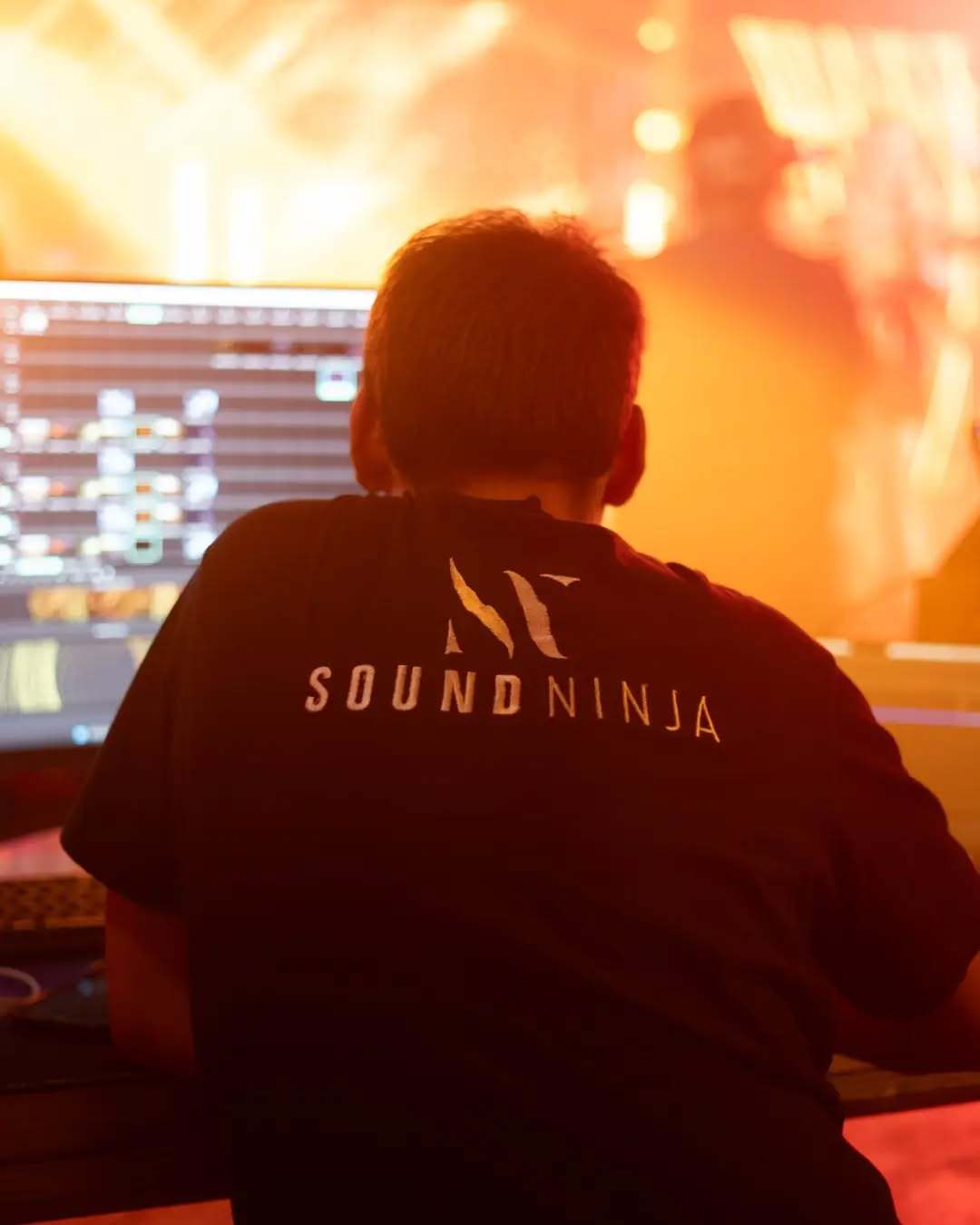
Lights on cue need a lighting operator at the desk. For anything with walk-ups, reveals or a show, it's worth it. Our lighting bookings come with an operator to run the lights.
Planning an event? Tell us the date, the venue and the guest count, and we'll quote with the full kit list.
I want an awesome event